



Find out more about our services
Understanding where the UK’s greenhouse gas emissions come from is key to tackling climate change. While the UK has made significant progress in reducing overall emissions over the past three decades, major challenges remain. Some sectors have made dramatic cuts, while others are lagging behind or even increasing their emissions. By identifying the main sources, we can better target policies, investment, and behavioural change to reduce the UK’s climate impact.Greenhouse gases, or GHGs, include carbon dioxide (CO₂), methane (CH₄), nitrous oxide (N₂O), and fluorinated gases. These gases trap heat in the atmosphere, causing global warming. In the UK, emissions are measured in terms of carbon dioxide equivalent (CO₂e) to provide a standard comparison. The biggest sources of these emissions come from energy production, transport, buildings, agriculture, and industry.
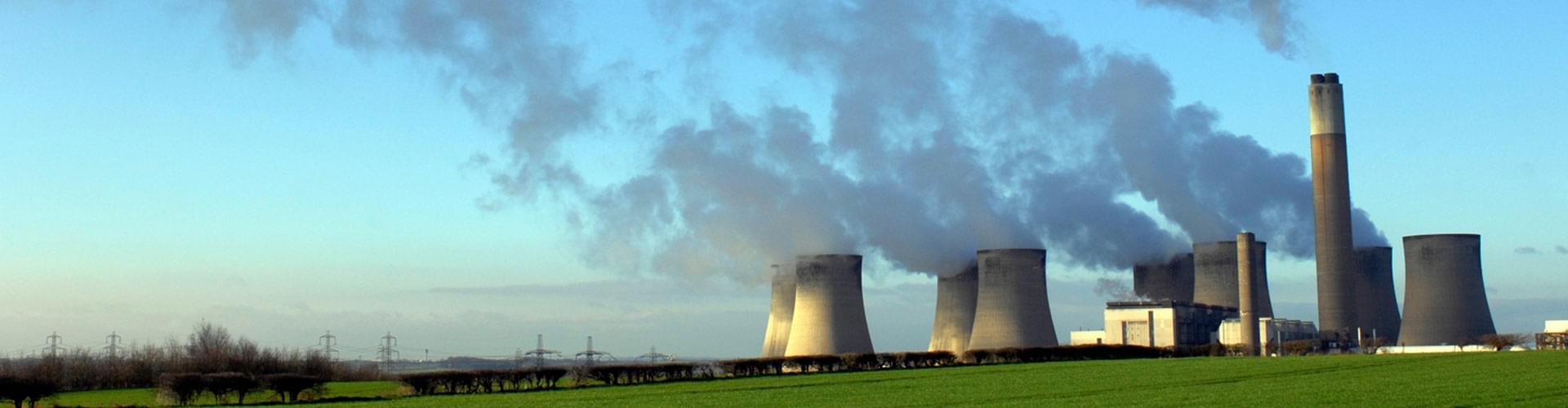
Historically, energy supply was the UK’s largest emitter. Coal-fired power stations and gas plants released vast amounts of CO₂ into the atmosphere. However, this sector has undergone a transformation. The UK has phased out much of its coal generation and significantly increased the use of renewables like wind and solar. As a result, emissions from energy production have dropped by over 70 percent since 1990. While natural gas still plays a role, the shift to greener electricity is one of the UK’s biggest climate success stories.
Transport is now the UK’s largest emitting sector. Cars, vans, lorries, planes, and ships together contribute around a quarter of total greenhouse gas emissions. Most of this comes from road vehicles burning petrol and diesel. While electric vehicles are growing in popularity, they still make up a small portion of the fleet. Aviation is also a significant source, especially as international flights are not always fully accounted for in national statistics. Reducing emissions from transport will depend heavily on electrification, public transport investment, and encouraging people to drive less.
The residential and commercial building sector is another major contributor. Heating homes and workplaces with gas boilers and inefficient insulation systems leads to high CO₂ emissions, especially during winter months. The UK has some of the oldest and least energy-efficient housing stock in Europe. Improving insulation, upgrading heating systems, and installing low-carbon technologies like heat pumps are essential steps for cutting emissions from buildings.
Agriculture presents a different set of challenges. It accounts for around 10 percent of UK emissions, but not from carbon dioxide. Most emissions come from methane, produced by livestock digestion, and nitrous oxide, released from fertilisers and soil. These gases are more potent than CO₂ in terms of warming effect. Because these emissions are tied to biological processes, they are harder to eliminate. Changes in land management, dietary habits, and farming techniques will all play a role in reducing agriculture’s climate footprint.
Industry is another significant source, especially manufacturing and construction. Heavy industries like steel and cement produce large amounts of emissions due to both energy use and chemical processes. While some progress has been made through efficiency improvements and carbon capture research, many industrial processes remain carbon-intensive. The government is investing in innovation and green technology to decarbonise this sector, but full transformation will take time.
Waste management contributes a smaller share of emissions, primarily from methane released by landfill sites. Recycling, composting, and capturing landfill gas have helped reduce this impact. However, waste reduction and circular economy practices remain vital for cutting emissions even further.
International shipping and aviation, while not always included in domestic totals, are growing contributors to global emissions. The UK is working with international partners to address these through fuel efficiency standards, carbon offset schemes, and innovation in cleaner transport fuels.
It’s also worth noting the growing role of imported emissions—those tied to goods made abroad but consumed in the UK. While they don’t show up in national carbon accounts, they still contribute to global climate change. Tackling these requires more sustainable consumption and transparent supply chains.
The UK has made impressive strides in cutting emissions overall, reducing its carbon footprint by about 50 percent since 1990. Much of this progress comes from decarbonising power generation. However, achieving net zero by 2050 will require faster action in harder-to-abate sectors like transport, heating, agriculture, and industry.
The government’s net zero strategy includes steps such as phasing out new petrol and diesel cars by 2035, retrofitting homes with better insulation, investing in hydrogen and carbon capture, and supporting green jobs. Public engagement will also be critical. Individual actions—like reducing meat consumption, insulating homes, switching to cleaner vehicles, and choosing greener products—can all help cut emissions further.
Climate change is a complex challenge, but understanding where emissions come from gives us the roadmap to tackle it. Every sector, every community, and every household has a role to play. By continuing to push for change, adopt cleaner technology, and make informed choices, the UK can lead the way to a more sustainable, low-carbon future.
Back to Articles